
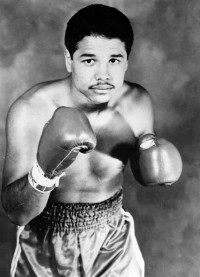
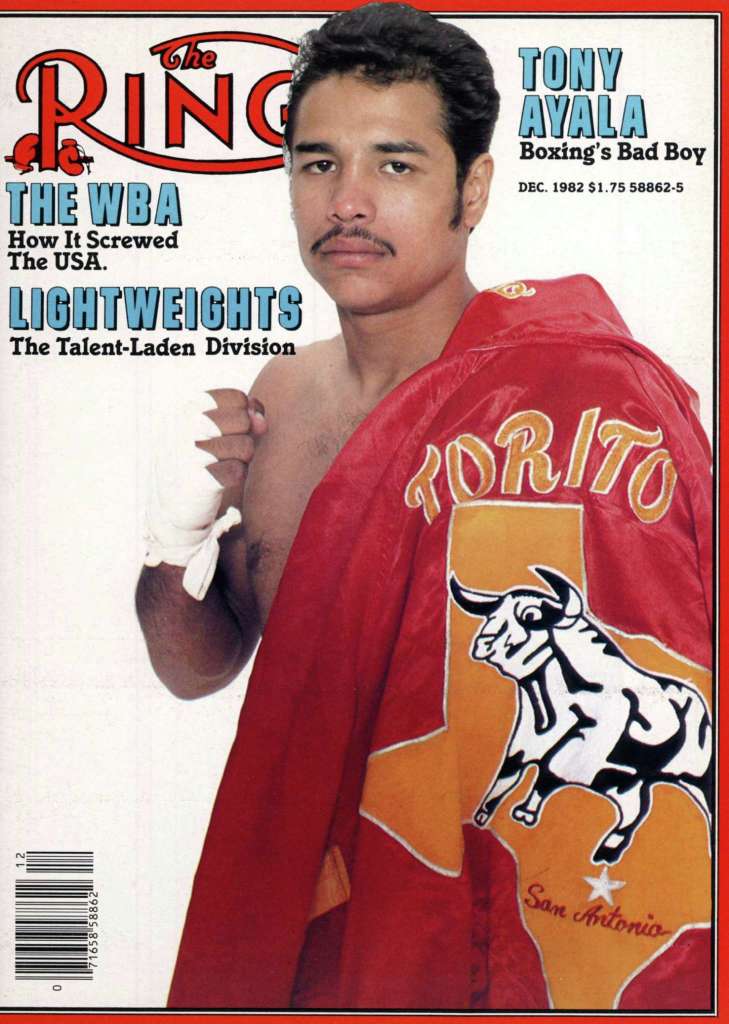
Tony Ayala Jr. nicknamed “El Torito” was a prodigy who came from a boxing family based in San Antonio TX. His ex-Marine father, Tony Ayala Sr., put gloves on his hands at such a young age (5) that he was practically born with them on. Following in the footsteps of his three older brothers, Tony amassed almost 150 fights as an amateur. He was still a teenager of 17 when he made his professional middleweight debut in 1980, knocking out journeyman Zip Castillo in the first round.
Managed by famed trainer Lou Duva—who claimed that Tony was “a once-in-a-lifetime talent”—his path up the professional ranks was carefully crafted. Taking a look at those early fighters, not many of them stood out as quality opposition. However, this was the norm: any manager or trainer would admit to doing the same thing for their fighter—slowly bringing them along before gradually increasing the level of competition.
Rapid Rise – On The Cusp
Tony had many positive attributes that made him a threat in the middleweight division. First, he possessed devastating punching power in both hands and relished the opportunity to punish opponents with savage body shots. Experts noted that his head movement also made him stand out, allowing him to avoid counterpunches. While some may have seen his style as more of a brawler, he was exceptionally savvy in the ring and employed a relentless pressure attack, cutting off the ring on his opponents. He quickly moved up the WBA rankings to #2 in the junior middleweight class. After dismantling top contender Carlos Herrera with a 3rd-round knockout, his record stood at an impressive 21-0 (19 by KO), placing him in line to fight champion Davey Moore in 1983.
Demons Invoked
Behind his rising success in the ring, Ayala’s life outside of it was anything but successful. Reportedly introduced to heroin by his older brother Mike at 12 years old, Tony’s teens were turbulent as he was plagued by both alcohol and drug abuse. It goes without saying that boxing is a violent sport, and while he was able to control his rage inside the ring, disturbing patterns of destructive and deviant behavior emerged outside of it.
It began at 15 when, high on drugs, Ayala was accused of brutally raping an 18-year-old woman in the restroom of a drive-in theater. The charges were reduced to aggravated assault, and within a week of winning his pro debut, a judge gave him a 10-year probated sentence. All was seemingly quiet outside the ring until the summer of 1982, when Tony was arrested and charged in a home burglary. Ayala was drunk at the time and fortunate to escape formal charges when the homeowner decided against pressing them. A four-week stint at a rehab clinic in California was a step in the right direction, but things came to a head at the end of the year, altering the course of the young man’s life forever.
Sent Away
A little over a month after Ayala defeated Carlos Herrera in late November 1982, he was in New Jersey discussing a tune-up fight in late January before the big-payday championship fight against Moore—a bout that reportedly would have netted him $750,000. It would never happen. On New Year’s Day 1983, Ayala broke into a neighbor’s apartment and brutally raped her at knifepoint. He was tried and convicted on six counts and sentenced to 15–35 years in prison, where he remained until 1999.
Redemption Squandered
Shortly after his release from prison, Ayala returned to the ring, but he was in his mid-30s and past his prime. It didn’t take long for him to find trouble again, and his pattern of violence reemerged in an all-too-familiar way. In late 2000, he was shot by a woman while trying to break into her home in San Antonio. He was charged with burglary and intent to commit sexual assault, but he continued to box while awaiting trial. Eventually, he plea-bargained his way to a lesser charge, receiving 90 days in jail and probation. The train wreck was allowed to roll on. In 2004, Ayala went back to prison for 10 years after violating his parole when police stopped him for speeding, driving without a license, and possessing heroin.
The Curtain Call
Tony Ayala was a free man in early 2014. Although he was no longer boxing by this point, he was helping his brothers run the family gym in San Antonio. It was there, in the early morning hours of May 12, 2015, that he died alone from a heroin overdose. It was almost inevitable that his life ended the way it did. In the end, Tony Ayala’s legacy is a tainted one. A man whom Hall of Fame trainer Angelo Dundee once considered one of the most prominent boxing prospects of all time sadly was defeated by his demons and never lived up to his potential. How he would have fared against the greats of his time—like Marvin Hagler, Thomas Hearns, or Roberto Duran—is anyone’s guess, but if we take Lou Duva’s word for it, Ayala would have “walked through every one of them.”


Leave a Reply